
Essential Guide to Functional Medicine

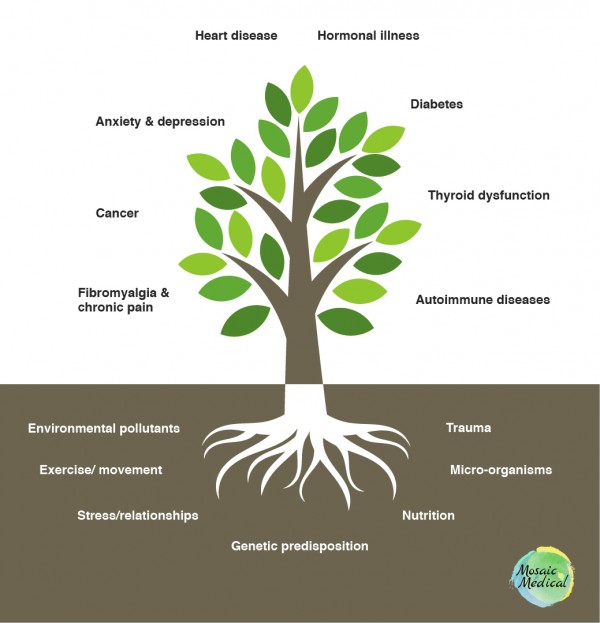
Functional Medicine focuses on identifying and correcting the root cause of ill health.
This means less emphasis on the symptoms and more on why you have them.
Functional Medicine has been gaining increasingly popularity as people seek to find answers as to why they are ill and how they can reverse poor health.
Functional Medicine recognises that the body is an integrated whole and that addressing a person in a holistic way is key when addressing ill health. Unlike in conventional medicine, which often focuses on symptom control with medications, Functional Medicine looks for the root cause ofill health.
To use an analogy, if you find a leak in the bathroom, you can either look and fix the leak, or you can mop the floor. Functional Medicine addresses ill health by looking for the ‘leaks’. Treatment plans are based on the principles of nutrition, lifestyle and a patient’s environment.
In Functional Medicine, treatment plans are based on preventative and restorative lifestyle strategies. In conventional medicine, treatments are usually only started when a disease has already developed and often aims to simply supress symptoms with prescription drugs.
How does it work?
A detailed history is taken to try to identify what has predisposed an individual to ill health. This may involve exploring someone’s genetics, diet, lifestyle factors and environmental exposures.
The consultation also includes clinical examination if warranted, and then a discussion about how best to move forward.
Specialised laboratory testing may be suggested if indicated. Functional testing may involve in depth analysis of nutritional status, gut health, hormone profiles, heavy metal toxicity screens and immune function.
Treatment plans are unique to the individual but may involve a combination of specific nutritional recommendations, lifestyle modification, supplements and medications.
What does it treat?
Functional Medicine is suitable for anyone with a chronic health condition. It is also suitable for anyone wishing to optimise their health.
Medical conditions may include:
Hormonal problems
Menopause, endometriosis, polycystic ovaries, acne thyroid conditionsDigestive problems
Irritable bowel, food reactions, acid problems, diverticulosis, SIBO
Cardio-metabolic problems
Diabetes, high blood pressure, high cholesterol
Auto Immune problems
Rheumatoid arthritis, coeliac, vitiligo, Hashimoto’s
Multi-system disorders
Fibromyalgia, chronic fatigue syndrome, Long Covid
Neurological problems
Migraines, cognitive decline, depression, anxiety
How does it work?
A detailed history is taken to try to identify what has predisposed an individual to ill health. This may involve exploring someone’s genetics, diet, lifestyle factors and environmental exposures.
The consultation also includes clinical examination if warranted, and then a discussion about how best to move forward.
Specialised laboratory testing may be suggested if indicated. Functional testing may involve in depth analysis of nutritional status, gut health, hormone profiles, heavy metal toxicity screens and immune function.
Treatment plans are unique to the individual but may involve a combination of specific nutritional recommendations, lifestyle modification, supplements and medications.
To find your nearest practitioner, you can search on the Institute of Functional Medicine website. https://www.ifm.org/find-a-practitioner/ At Balanced we have a Functional Medicine doctor ready to help you. Why not try an online consult? We have also included below common issues and explanitions.
Chronic Fatigue Syndrome
Chronic fatigue syndrome (CFS), also known as myalgic encephalitis (ME), is a long-term illness with a wide-range of symptoms. The most common symptom is extreme tiredness.
Read MoreEndometriosis
Endometriosis is a painful, debilitating condition that affects up to 1 in 10 of women or reproductive age. It occurs when tissue that is similar to the endometrium (lining of the womb) grows outside of the womb, most commonly in the pelvis and bowel. Known as endometrial lesions, this misplaced tissue causes a range of symptoms
Read MoreIrritable Bowel Syndrome
Endometriosis is a painful, debilitating condition that affects up to 1 in 10 of women or reproductive age. It occurs when tissue that is similar to the endometrium (lining of the womb) grows outside of the womb, most commonly in the pelvis and bowel. Known as endometrial lesions, this misplaced tissue causes a range of symptoms
Read More